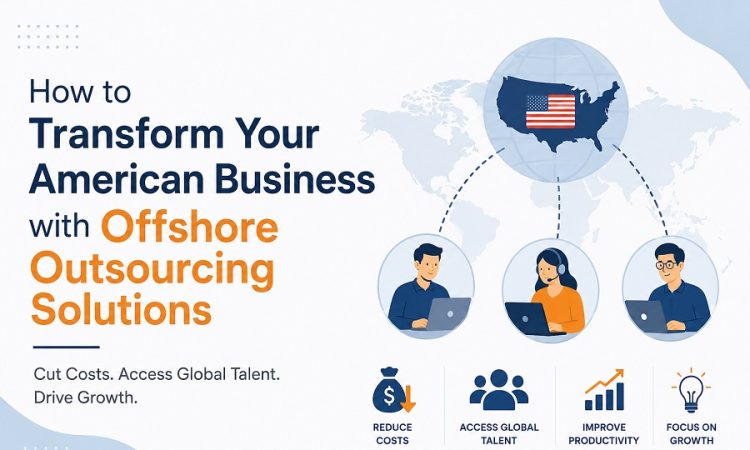
In today’s hyper-competitive global marketplace, American businesses face an unprecedented challenge: how to optimize operations and maximize profitability without compromising quality or service delivery. The answer that millions of forward-thinking companies have discovered is strategic offshore outsourcing. This transformative approach allows organizations to focus their energy, resources, and talent on what they do best while delegating specialized tasks to world-class professionals in other countries. This comprehensive guide explores everything you need to know about offshore outsourcing and how it can revolutionize your business operations.
The Evolution and Revolution of Offshore Outsourcing in America
The practice of outsourcing has undergone a dramatic transformation over the past two decades. What once seemed like a controversial and risky business decision—criticized as outsourcing jobs and reducing American employment—has now become mainstream and strategically essential. This remarkable shift reflects a fundamental change in how American business leaders view outsourcing.
Key evolutionary milestones in offshore outsourcing:
- 2000s: Initial emergence of offshore outsourcing, primarily focused on IT and customer service
- 2010s: Expansion into diverse industries including finance, healthcare, and marketing
- 2015-2018: Development of sophisticated quality assurance and communication protocols
- 2019-2024: Integration of AI, automation, and advanced project management tools
- Today: Strategic partnership model replacing transactional cost-cutting approach
The primary driver behind this transformation is the realization that outsourcing isn’t about cutting corners or sacrificing quality—it’s about accessing specialized talent pools, reducing operational costs significantly, and improving overall business efficiency and scalability. Modern communication technology, including video conferencing, project management software, and cloud-based collaboration tools, has made seamless global collaboration a reality.
Why American Businesses Are Embracing Strategic Offshore Solutions
The reasons driving American companies to embrace offshore outsourcing are both compelling and multifaceted. While cost efficiency remains important, modern businesses recognize numerous strategic advantages that extend far beyond simple expense reduction.
Primary drivers behind offshore outsourcing adoption:
- Cost Efficiency: Reduce labor costs by 50-70% compared to domestic hiring
- Global Talent Access: Tap into specialized professionals worldwide without geographic constraints
- Scalability: Rapidly expand or contract your workforce based on business needs
- 24/7 Operations: Maintain continuous business operations across multiple time zones
- Focus on Core Competencies: Allow leadership to concentrate on strategic initiatives
- Risk Mitigation: Distribute business operations across geographic locations
- Quality Improvement: Access specialized teams with deep expertise in specific domains
Cost efficiency represents one of the most compelling advantages. Labor costs in many offshore destinations are substantially lower than domestic alternatives—often 50-70% less expensive. This significant reduction directly impacts your company’s bottom line and financial flexibility, allowing you to reinvest savings into growth initiatives, research and development, product innovation, or increased shareholder returns.
Beyond mere cost reduction, offshore outsourcing provides unprecedented access to a global talent pool. American businesses are no longer limited by geographic boundaries, time constraints, or local labor market availability when recruiting specialized professionals. Whether you need software developers, data analysts, graphic designers, financial experts, or customer support specialists, you can find world-class talent willing to work for competitive compensation rates.
Additionally, outsourcing allows companies to scale operations dynamically without the burden of traditional hiring and organizational overhead. During peak seasons, for special projects, or when business demands surge, you can rapidly expand your workforce. When demand normalizes, you can scale back without the complexity, legal considerations, or expense of layoffs and severance packages.
Virtual Assistants: The Modern Business Game-Changer
One of the most transformative applications of offshore outsourcing has been the explosive rise of virtual assistant services. These remote professionals handle an impressive variety of administrative, operational, and business development tasks, from email and calendar management to customer relations, research, data entry, and content creation. By employing virtual assistants america services, American entrepreneurs, business managers, executives, and growing companies can reclaim countless hours previously spent on administrative work that doesn’t require executive decision-making.
Benefits of hiring virtual assistants from offshore providers:
- Unprecedented cost efficiency compared to domestic administrative staff
- Flexibility to scale services up or down based on seasonal demands
- Pay only for hours worked—no benefits, equipment, or office space overhead
- Access to highly trained professionals with diverse skill sets and experience
- Freedom for executives to focus on high-value strategic activities
- Improved work-life balance through task delegation and workload reduction
Virtual assistants offer unprecedented flexibility in how you structure your business operations. Unlike traditional full-time employees, virtual assistants work independently, managing their own workspace, equipment, and professional development. You pay only for the hours worked, eliminating overhead costs associated with office space rental, equipment provision, benefits packages, payroll taxes, and administrative burden.
This model proves particularly advantageous for startups with limited budgets, freelancers juggling multiple clients, small business owners wearing multiple hats, and growing companies that need professional support without the financial commitment of full-time employment. Many American companies report that their offshore virtual assistants are equally or even more productive than their domestic counterparts, delivering higher-quality work with faster turnaround times.
Selecting the Perfect Outsourcing Partner for Your Business
While offshore outsourcing offers substantial benefits, long-term success depends heavily on selecting the right partner. When evaluating an outsourcing company in america, several critical factors warrant careful consideration and thorough evaluation.
Key evaluation criteria when selecting an outsourcing partner:
- Track Record: Review case studies, testimonials, and client references from businesses in your industry
- Quality Assurance: Evaluate their systems for ensuring consistent, high-quality output and performance
- Security Practices: Confirm robust data protection, compliance with regulations, and security certifications
- Communication: Assess their availability, responsiveness, and reporting frequency
- Experience: Look for companies with proven experience in your specific industry or service area
- Scalability: Ensure they can grow with your business needs and handle increased workload
- Training and Development: Confirm they invest in continuous staff training and skill development
First, examine the company’s track record and client testimonials thoroughly. A reputable outsourcing provider should have extensive case studies demonstrating their ability to consistently deliver results for clients in your industry or similar sectors. Look for companies with long-standing relationships with recognizable brands, positive reviews from verified clients, and willingness to provide references you can contact directly.
Second, assess their quality assurance processes in depth. How do they ensure consistent, high-quality output every single time? What specific systems and processes do they have in place to monitor performance and catch errors? Do they provide regular reporting and transparent communication about challenges? These operational details often separate excellent providers from mediocre ones.
Third, evaluate their security and confidentiality practices carefully. When outsourcing business processes, you’re potentially sharing sensitive information, proprietary data, or confidential client information. Confirm that the company maintains robust data protection measures, complies with relevant regulations like GDPR or HIPAA if applicable, and can provide security certifications or audit reports.
Finally, consider their communication approach and availability. The best american offshore solutions providers prioritize clear, regular, and proactive communication. They should offer multiple communication channels, provide detailed reporting and metrics, maintain transparency about challenges and progress, and be responsive to your questions and concerns.
Strategic Benefits That Extend Beyond Simple Cost Reduction
While cost efficiency initially attracts American businesses to outsourcing, many discover additional strategic benefits that ultimately prove more valuable to long-term business success than the initial cost savings.
Time zone advantages represent one of the most significant, yet often overlooked, strategic benefits. With teams operating across multiple time zones, your business can maintain around-the-clock operations. Customer support can continue while your domestic team sleeps. Data processing, analysis, and content creation can happen overnight. This results in faster service delivery, improved customer satisfaction, quicker project completion times, and competitive advantage in fast-moving markets.
Quality improvement is another unexpected but powerful advantage. Specialized offshore teams often become deep experts in their specific domains through focused practice and continuous learning. By delegating tasks to professionals who concentrate exclusively on those specific functions, companies frequently experience improved quality compared to generalist domestic employees juggling multiple competing responsibilities.
Strategic focus and innovation acceleration represent critical competitive advantages. Executives and core team members can concentrate on high-value activities that directly impact business strategy, competitive positioning, and revenue growth. Rather than getting bogged down in administrative details, routine tasks, or operational minutiae, leadership can dedicate their valuable time and mental energy to innovation, building client relationships, developing new products, and long-term strategic planning.
Implementing Offshore Outsourcing Successfully
Successful offshore outsourcing requires strategic planning, clear communication, and realistic expectations. Here’s a proven roadmap for implementation:
- Identify suitable functions: Determine which processes are best suited for outsourcing (usually rule-based, repetitive, or specialized technical work)
- Document thoroughly: Create detailed documentation of your processes, requirements, quality standards, and expectations
- Start small: Begin with a pilot project or limited scope engagement to evaluate the partnership with minimal risk
- Establish communication: Set clear expectations about communication frequency, response times, and reporting requirements
- Provide feedback: Offer constructive feedback regularly to help your partner continuously improve
- Monitor progress: Track key performance indicators and ensure deliverables meet your quality standards
- Scale gradually: Once the partnership works well, expand the engagement to additional projects or functions
The Future of Offshore Outsourcing
The offshore outsourcing landscape continues to evolve rapidly with emerging technologies and changing business dynamics. Artificial intelligence, machine learning, and advanced automation are creating new opportunities for efficiency gains and innovation. Rather than replacing human workers, these technologies are enhancing the capabilities of offshore teams, enabling them to tackle more complex, strategic, and value-added tasks that require critical thinking and creativity.
American businesses that effectively and strategically leverage offshore outsourcing will gain significant competitive advantages in the coming years. Cost savings provide financial flexibility for investment and growth. Access to global talent and 24-hour operations enhance service delivery, customer satisfaction, and competitive positioning. The future belongs to companies that view outsourcing not as a cost-cutting measure, but as a strategic partnership model for business transformation and sustainable growth.
Conclusion: Your Path to Business Transformation
Offshore outsourcing has evolved from a controversial and misunderstood business strategy to a fundamental, strategic component of modern, competitive business operations. American companies that embrace strategic outsourcing—whether through virtual assistants, specialized service providers, or comprehensive offshore solutions—position themselves for sustainable growth, improved profitability, and lasting competitive success in an increasingly complex global marketplace.
The key to success is approaching outsourcing strategically and deliberately, partnering with reputable and trustworthy providers, and viewing outsourcing as an opportunity for meaningful business transformation rather than simply a means for quick cost-cutting. In an increasingly competitive global marketplace, offshore outsourcing isn’t just a business option anymore—it’s increasingly becoming a business necessity for companies committed to long-term success, sustainable growth, operational excellence, and maintaining competitive advantage. Start your outsourcing journey today and unlock the full potential of your business.