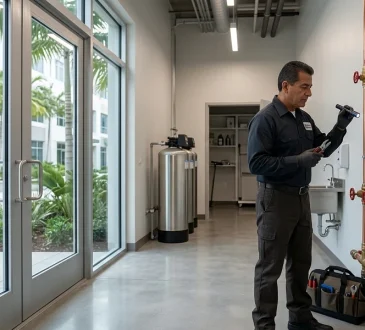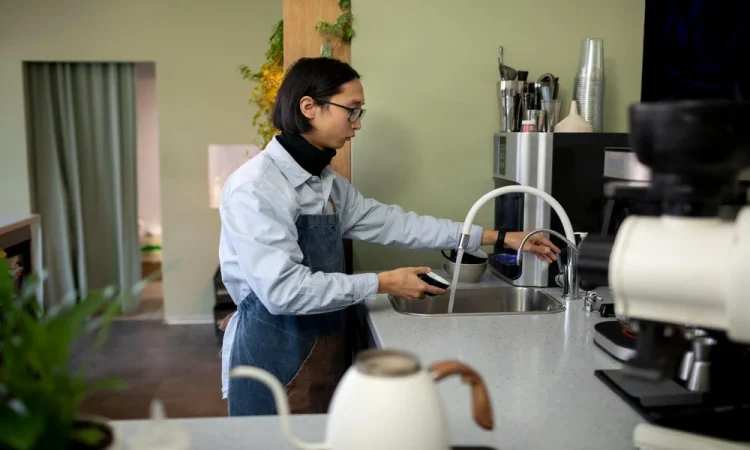
A cafe owner replaces a boiler element for the second time in eighteen months, retrains a barista whose espresso keeps tasting flat, and wonders why the same beans produce different results week to week. Each problem gets addressed separately, and none of the fixes hold, because the common factor sits in the water feeding every machine in the kitchen. Water quality affects equipment lifespan and beverage flavour more than most operators expect, and the symptoms rarely announce their cause. Seven signs suggest a commercial kitchen would benefit from reverse osmosis treatment.
1. Scale Building Up Faster Than Expected in Heated Equipment
Espresso machines, boilers, combi ovens, and dishwashers all accumulate scale from dissolved minerals in the water supply. Where descaling is needed noticeably more often than manufacturer guidance suggests, or where elements and valves fail prematurely, mineral content is likely the cause. Scale also reduces heating efficiency well before it causes failure, raising energy consumption quietly.
2. Beverage Flavour Varies Without Any Change in Ingredients or Technique
Water makes up the overwhelming majority of coffee and tea by volume, and its mineral composition affects extraction directly. When the same beans, grind, and method produce inconsistent results, variation in the water supply is a plausible explanation that operators often investigate last.
3. Equipment Manufacturers Specify Water Parameters You Can’t Confirm
Many commercial machines specify acceptable ranges for hardness, total dissolved solids, and chlorine content, and warranty terms sometimes reference them. Operators who have never tested their supply against these parameters cannot know whether they comply, and a warranty claim for scale-related damage may be difficult to sustain.
4. Visible Residue or Cloudiness in Glassware After Washing
Spotting, film, or cloudiness on glassware after a dishwasher cycle indicates dissolved solids left behind as water evaporates. Beyond the presentation issue in a customer-facing setting, it signals mineral content that is also accumulating inside the machine itself.
5. Chlorine or Off-Flavours Detectable in Finished Drinks
Where customers or staff notice a chemical or flat taste in water-based beverages, treatment addressing chlorine and dissolved compounds usually resolves it. Carbon filtration alone handles chlorine, but where dissolved solids also contribute, commercial RO water filters in Singapore address both.
6. Filter Cartridges Requiring Replacement Unusually Often
Existing filtration exhausting faster than its rated interval suggests incoming water quality is placing heavy demand on the system. This often indicates the current setup is under-specified for the supply and volume involved.
7. Planning Expansion or Adding Water-Dependent Equipment
Adding a second espresso machine, a new ice maker, or increased production volume raises the cost of water-related problems. Addressing treatment before expanding is considerably cheaper than retrofitting after new equipment starts scaling.
Key Signs Worth Watching For
- Descaling required more frequently than manufacturer guidance indicates
- Beverage flavour varying with no change to beans, grind, or method
- Manufacturer water specifications you have never tested against
- Spotting or cloudiness on glassware after washing
- Chlorine or flat off-flavours noticeable in finished drinks
- Filter cartridges exhausting well before their rated interval
- Expansion plans adding more water-dependent equipment
Testing Before Specifying a System
The sensible starting point is a water test measuring hardness, total dissolved solids, and chlorine at the premises, since supply characteristics vary and specifying treatment without data risks over- or under-treating. Results indicate whether full reverse osmosis is warranted or whether simpler filtration suffices. It’s also worth noting that RO removes minerals comprehensively, and some beverage applications benefit from controlled remineralisation afterwards to maintain extraction quality, so specialists frequently pair RO with a blending or remineralisation stage rather than feeding fully demineralised water to espresso equipment. Operators comparing water dispensers in Singapore for front-of-house service alongside back-of-house treatment often find a single specialist can address both, which simplifies servicing and keeps one provider accountable for water quality throughout the premises.
Contact Pure Water Dispensers to arrange a water test at your premises and specify treatment suited to your equipment and beverage requirements.