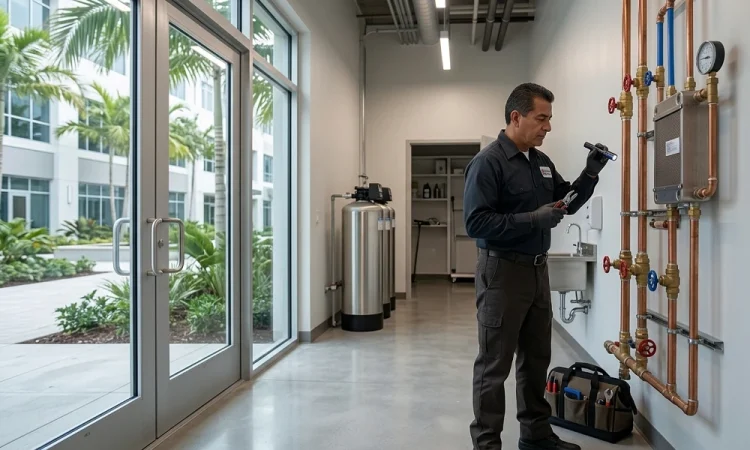
For a business owner, plumbing is easy to overlook when every fixture is working. That changes quickly when a restroom backs up, a supply line leaks, or a sewer odor reaches customers. Doral properties face busy schedules, frequent use, and weather conditions that can expose weak points. Planning helps protect employees, customers, inventory, and revenue.
What commercial plumbing covers
Commercial plumbing is more than fixing a dripping faucet. It includes water supply lines, drainage, sewer connections, backflow prevention, water heaters, restrooms, kitchens, grease-related drainage, and the fixtures that support daily work. A restaurant may need dependable dishwashing and floor drains, while an office or retail store may need quick action when a leak threatens daily operations.
The right maintenance plan begins with a clear view of the property. Owners should know where shutoff valves are located, which fixtures receive the most use, and whether older pipes or recurring backups have been documented. This helps a plumber diagnose problems faster and helps staff respond safely.
Why local conditions and building use matter
Every property has its own risk profile. A busy food-service space places heavy demands on sinks, drains, hot-water equipment, and waste lines. A multi-tenant building may experience problems when several suites share a main line. Older buildings can contain worn valves, corroded connections, or outdated fixtures.
Local climate matters, too. Heavy rain can place pressure on drainage systems and expose weaknesses around exterior cleanouts or low-lying areas. Humidity can make small leaks harder to notice until walls or ceilings show damage. A local inspection can connect these conditions with the way a property operates.
Businesses searching for commercial plumbing in Miami often need a provider that understands both the service issue and the business interruption it may cause. The goal is to identify the source, explain the options, and plan work around opening hours, tenants, deliveries, and customer traffic.
Build a preventive maintenance routine.
Preventive work does not need to be complicated. Start with visual checks. Look under sinks for moisture, inspect exposed piping for corrosion, and watch for slow drains, unusual sounds, foul odors, or pressure changes. Staff should report small symptoms instead of treating them as normal.
Schedule professional inspections based on usage and system age. High-use kitchens and public restrooms may need more frequent service than a lightly occupied office. Maintenance can include drain evaluation, fixture testing, water-heater checks, valve inspection, and review of previous repairs. Simple records make patterns easier to spot.
Drain care also deserves attention. Food scraps, oils, paper products, and unsuitable cleaning materials can create restrictions. Clear staff procedures can reduce blockages. When a line repeatedly slows down, chemical treatments may hide the problem. A professional assessment can determine whether the issue is local, inside the building, or connected to a larger line.
Respond quickly to plumbing failures.
When a leak or backup occurs, assign one person to coordinate the response. Shut off the nearest safe valve if known. Keep people away from standing water, protect nearby equipment if safe, contact a qualified provider, and document the affected fixture, timing, and visible damage.
Prompt commercial plumbing repair can limit disruption, but speed should not replace diagnosis. A temporary patch may stop visible water while a hidden connection continues to fail. The visit should address the immediate problem and clarify whether additional work or replacement is sensible.
OSHA guidance emphasizes maintaining drainage and providing dry standing areas where wet processes are used. That principle matters in kitchens, utility rooms, laundries, and other work areas where water regularly reaches the floor. Workplace sanitation guidance can help owners keep plumbing-related housekeeping and safety decisions in view.
Choose a service partner carefully.
Look for clear communication, relevant commercial experience, dependable scheduling, and written explanations of recommended work. The provider should understand that a business may need phased repairs, after-hours coordination, or a plan that limits access restrictions.
Many commercial plumbers agree that early reporting makes troubleshooting easier, especially when staff can describe when the symptom began and what changed. Owners should also ask what is included in an inspection, which areas require immediate attention, and how future maintenance will be tracked.
Good plumbing supports more than comfort. It helps a property remain clean, usable, and ready for business. The CDC’s workplace hand-hygiene guidance also reinforces the importance of reliable access to soap, water, and drying supplies. About hand hygiene at work offers a useful public-health reference for businesses reviewing restroom and handwashing conditions.
Keep your Doral property ready.
The best time to review a commercial plumbing system is before a failure interrupts the day. A practical plan combines routine checks, professional maintenance, clear staff procedures, and fast access to help. For dependable commercial plumbing services, visit WM Plumbing to learn more about support for business properties.
Frequently Asked Questions
What should a business inspect regularly?
Check for leaks, slow drains, unusual odors, water-pressure changes, corrosion, and fixtures that no longer operate normally. Record recurring issues for professional review.
How often should commercial plumbing be serviced?
It depends on building age, occupancy, fixture count, and usage. High-demand kitchens and public restrooms generally need closer monitoring than lightly used spaces.
What should staff do during a plumbing emergency?
Keep people away from unsafe water, shut off a nearby valve only if it is safe, protect equipment when possible, and contact a qualified commercial plumber promptly.
Why is preventive maintenance valuable?
It can reveal wear and recurring symptoms before they become larger interruptions. It also gives owners better information for budgeting and scheduling repairs.