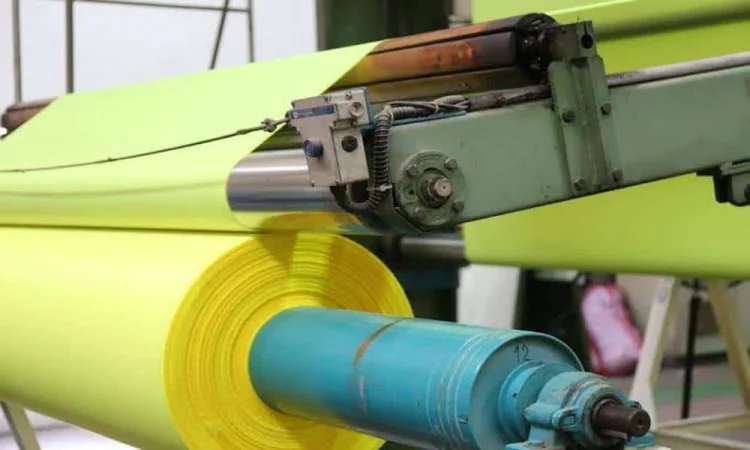
Making products that are of a high quality and are designed to last a long time is quite challenging. Especially in a world where making a quick buck and fast fashion being polarising but popular, creating fabrics and products that work is a must. Fabric welding is a technique used by high-quality manufacturers, ensuring that the welds and the seams of coated fabrics are robust, extending the life cycle for much longer than you might necessarily expect.
The importance of fabric welding for regulatory compliance
Fabric welding ensures that there is a higher chance of extending the lifecycle of a technical fabric product. Weld quality affects not only the life extension of a product but also the quality of the product itself and helps it to meet regulatory standards. You see this with technical fabric products that are coated and used within applications for safety-related procedures. With regulatory compliance required for certain applications, weld integrity plays a vital role in meeting those strict specifications. These can differ across industries, so working with a supplier that understands the use of fabric welding within different strict parameters becomes a necessity. This includes stress tests and dummy runs to ensure that everything functions to the highest standards prior to a larger production run.
What is the difference between welding and other bonding methods?
There are three main categories that you can simplify down to when discussing the bonding methods of technical fabrics: gluing, sewing, and thermoplastic welding. Fabric welding is the strongest method of the three, and it can be demonstrated across multiple examples for consistency of results. Seams that have been sewn can often suffer from tension failure, where the thread comes loose under pressure over time. Glue will also suffer from fatigue over a long period. For fabric welding however, there is no foreign element introduced to the fabric, allowing for a more robust, long-term performance.
What factors make fabric welding so effective?
Welding fuses two coated materials together without any adhesive or sewn interface. What this means is that there is a higher shear strength than the original pieces of fabric, providing permanence. The air-tight seals at the edges and the seam increase strength and therefore performance, leading to long-lasting air and liquid retention that is abrasion-resistant and maintains a high level of integrity. Fabric welding when compared with the other methods provides consistent results and reduces the possibility of human error due to the modern technology and processes used.
Utilising fabric welding for long-lasting products
If you are in the market for a new supplier to provide you with a long run of products that are designed and manufactured to last for a long time, look for companies using modern fabric welding technologies and techniques. Having trust in your suppliers is important, in any industry, but when discussing the integrity and quality of fabrics and special coatings for products, it becomes even more important. Choose carefully, with a company that can prove a history of success in smoothly utilising fabric welding for specialist products that are suitable to your company and industry.